Friday, October 31

Jesse: Telling THE story

The Creation to Christ story is roughly 15 minutes long and missionaries use it to find people interested in knowing more about who Jesus is and why he is our savior. Tessa and I walked through a neighborhood looking for people willing to listen to us practice telling the story. I like telling the story and listening to it be told. They way it flows from God creating the world to Abraham’s sacrifice to Christ’s resurrection and then the story of the prodigal son. The story shows the need for a savior and how he receives us.


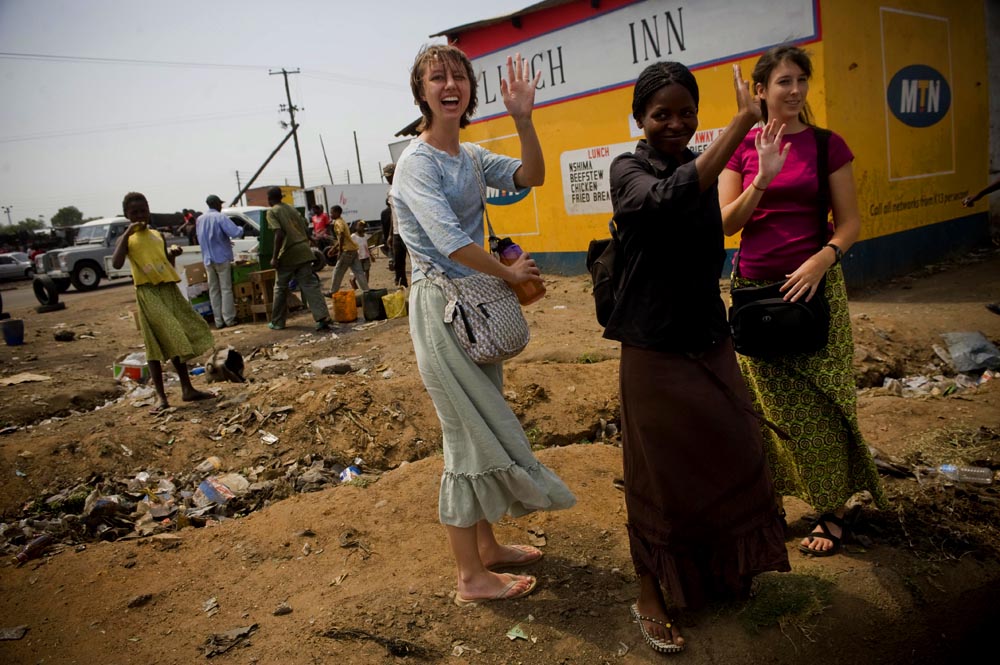
Tessa, Agness and I wave goodbye to our friends on the minibus as we prepare to go into the city, sharing the Creation to Christ story.

Thursday, October 30

kristen: learning to tell stories

today we learned about creation to Christ. tim, a missionary from south africa, told us the story of salvation, from the creation of the universe to the death and resurrection of Christ. this method of evangelism is particularly effective in africa, where oral learning and stories are passed from generation to generation. i am learning how important it is to really know the stories God has given us. how remarkable it us that God has chosen to give us his word in narrative form. that he has chosen stories to tell us the great truths and mysteries of the universe.


jesse practices sharing the story with her teammate, tessa.


tim shares with us the creation to Christ story.

Tuesday, October 28

kristen: death and funerals

today was the day to learn about sickness and funerals and death. we took a minibus to the city and stopped at a small dark shop off the main road. there, bridget advised us to purchase cooking oil, soap, sugar, and juice. it was a hot, hot day, and we began asking bridget questions as the sun beat down on our necks. she told us we were going to visit her friend, cynthia, who had been sick for a couple weeks.

as we approached the house, cynthia’s mother, eunice, ushered us in with a warm handshake. she invited us to sit, and offered us cold fantas. cynthia sat in the corner, with her hand to her forehead, her eyes glossed over, looking miserable. she had a deep cough, and told us she had been sick for maybe a week. but her mother told us quietly that she had been coughing since 2005. her son, duma (age 5), was also coughing.

soon her brother, kennon joined us. he also was sick, and his wife had died a couple years ago. he told us the sickness was difficult for him, because he was unable to work. we gave cynthia the gifts we had brought, and told her they hoped they could be of some comfort and help to her.

the neighbor, mrs. sikhosna also came in, and was sharing her difficulties with us. she has arthritis in her knees. she told us that she had expected to be able to visit and minister to people in her old age, but instead she was in constant pain. i was overwhelmed with the amount of pain and suffering in the lives of these brothers and sisters. i asked if we could pray for them, and we did. i was so convicted in my lack of faith, and my own self reliance.

it was good to fellowship with these brothers and sisters. we talked a lot about the diseases that are common in africa: malaria, HIV/AIDS, tuberculosis. There was little to say about the pandemics. life is difficult for most of the world. the sin and the fall seems to touch every atom of the universe, every part of our lives. how rarely do i realize that all of my hope is in Christ.

they asked us if things were different in the states—if our wealth makes life easier for us. we admitted that we suffered much less in body, but that other diseases—greed, arrogance, promiscuity, and drug abuse were common to us. it to was strange to realize how much sin has affected every culture. the human condition is universal. as we continued visiting, eunice disappeared into her room, and emerged with two chitanges (zambian skirts). she kneeled in front of us and told us that now we were true zambians. and that when we wear them, we can remember her family. it was humbling.


cynthia sitting in the doorway of the small room she shares with her mother and son. though she's never been tested, bridget tells us it's likely she is suffering from HIV/AIDS.


Monday, October 27

kristen: what is a missionary?

today we visited bridget’s role model, mrs. mukupa. mrs. mukupa serves as a deaconess in the local baptist church. as we sat down in her living room, she served us cans of cold coffee and roxie (very bravely!) tried a dried catipillar. she said it wasn’t so bad. tasted like crunchy liver.

our DFA today was "what is a missionary" so we asked mrs. mukupa her opinion. she told us that missionaries are the ones who follow in the footsteps of Christ, and those who brings others closer to God. she told us she considered herself a missionary.

she shared her testimony and talked about the church in zambia—one of the problems in the church here is non-believing church-goers. i was surprised to see this same issue across the ocean, so far from home. i told her that even in america, there is nominal christianity in the church.

i asked her about some of her struggles as a missionary. one of my greatest struggles in living overseas has been seeing the great gulf between the poor and the rich—seeing street kids begging barefoot, or young mothers unable to feed their children. after a moment’s hesitation, she began speaking rapidly, with bridget translating:

“this is a problem even i deal with. even among zambian people; there's is a difference in way of life. when i see someone with not enough money for some food, and God has blessed me with more, i must share. this is what God requires of christians. if that person dies of hunger, and i feasted on much, i will have to account for that someday before God."

her words have echoed in my head all day. as a missionary, or maybe just as a human, there is a real tempataion to just turn away from need, to just give up on compassion. living in a world, a country, a city, where you know you can never do enough. thre will always be empty bellies and injustice. girls sold into prostitution and people suffering from HIV/AIDS. there is the temptation to do nothing, because you can't do everything. to isolate yourself and live in a bubble. compartmentalize your life—misinisty in one box, and the suffering of others in another, as if you could be a Christian without love.


Sunday, October 26

kristen: family day

today was family day. we all worshipped together, and then had some time to just chill out. i spent the afternoon wandering around with my camera.
lots was going on around the seminary campus:


fequiere helped give elijah a haircut. elijah was a little bored, but didn't seem to mind.


the ladies spent some time just visiting in the cool evening weather.


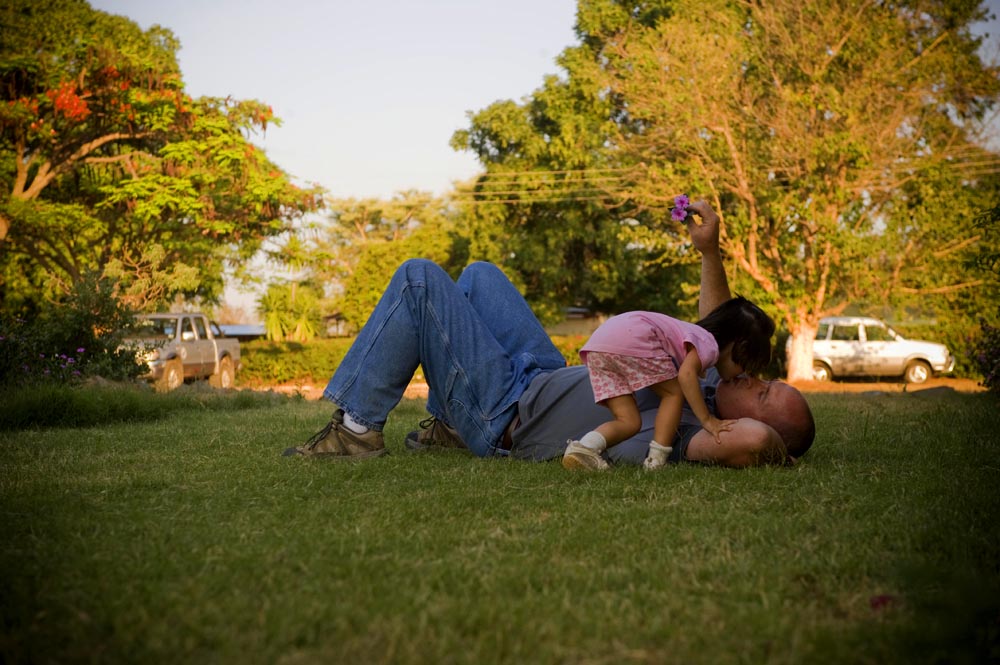
madi gives her father bruce some flowers, and a kiss.


after every meal, each participant is responsible for washing their dishes. even madi (with a little help) knows how to clean up after herself.


we dry our dishes, too.


Saturday, October 25

kristen: basic bio

we went with bridget again to the matero (city center). we got off the minibus after a 30 minute ride, and began walking down a dirt road, littered with milk cartons and soda cans ground into the dry brown dust. a cool breeze hurled dust into our eyes. we arrived at a weaved straw gate and a woman walked up to greet us.

bridget introduced her as a close friend, gertrude. we chatted with gertude in the small block of dirt, until she disappeared into the house. she peeked back through the door, and invited us in. her husband walked out without a word. we sat down in her living room, an adam sandler movie blaring on the television. we talked about her children, her husband, and her business. along with raising a family, caring for her husband, cooking and cleaning, gertrude designs and makes dresses. she showed us some of her work—a beautiful yellow print dress.

she told us how she met her husband. she was making shirts for a wedding in the village, and one of the men came to examine the shirt—“first a customer, then a husband,” she recalled, laughing. she was 17 at the time.

when her husband returned, we left. as we walked down the streets, we heard shouts of "howAHyuuuu!!!" from the children.

the only english they know: “how are you?”. the children are embarrassed and thrilled with the “muzungu”, or foreigner, replies or shakes their hand.

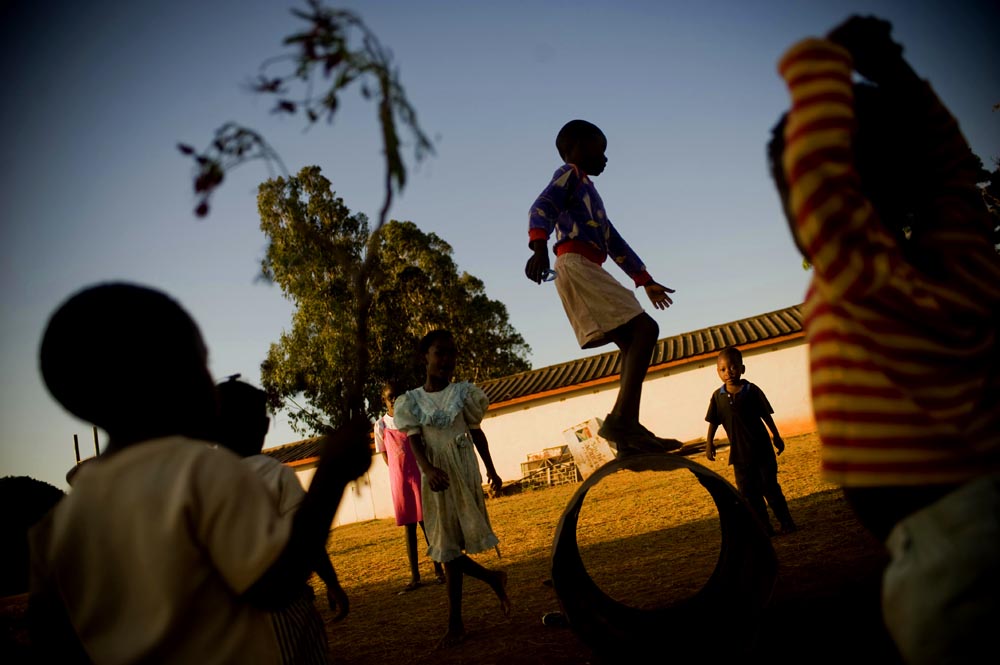
in the early evening, as the sunset light set the flame trees on fire, i went on a walk around the seminary. a crowd of children were playing in the courtyard. the older children were balancing themselves on black barrels, rolling them across the dirt. they invited me to try. a young boy, simon, held my hand as i tried to jump on the barrel, and keep my balance. i balanced there for about 2 seconds, before falling to the ground to the laughter of the rest of the children. we played football (american soccer) with an empty plastic bottle. when we were tired, we sat on the monkey bars, and sang “humble yourself before the lord.”


bridget and roxie look at photographs of gertrude's children.


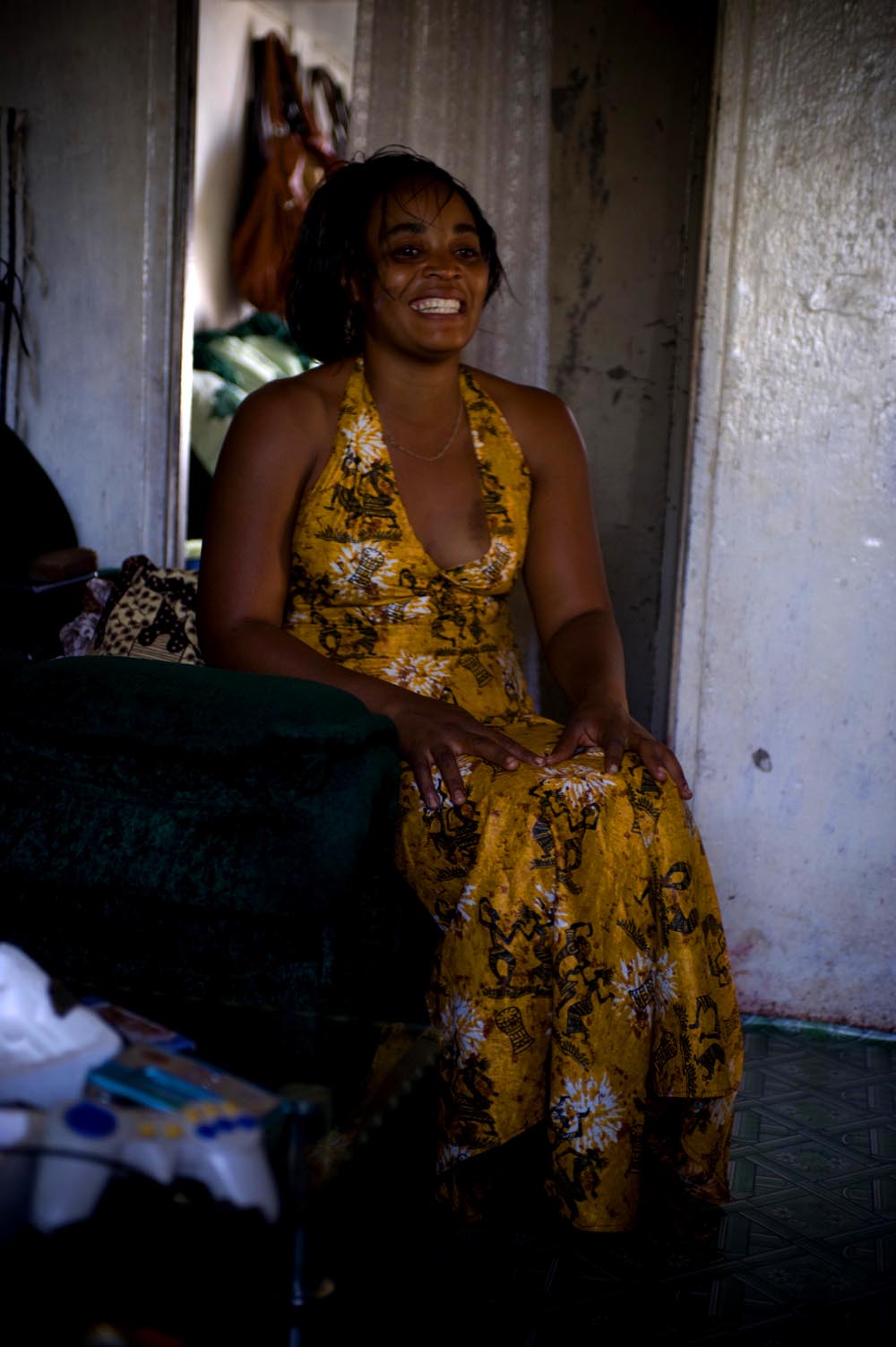
gertrude models one of her latest designs for us.


children at the seminary play on empty barrels.


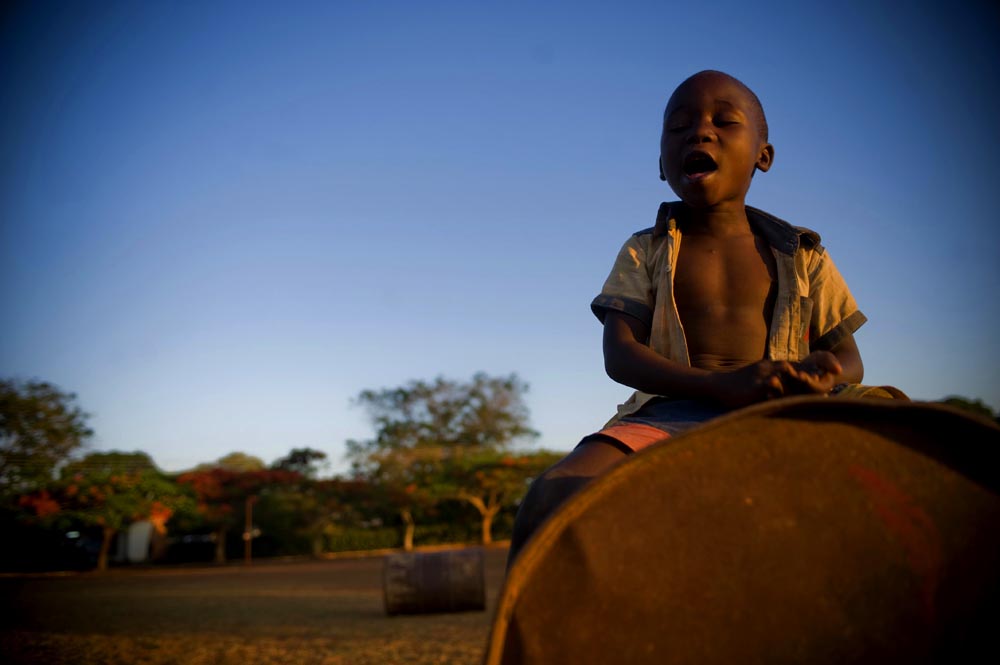
a young boy sings praise songs as he beats on a makeshift drum.

Friday, October 24

Jesse: Observation

We met our Zambian helper today. Her name is Agness, and she helped us navigate public transportation and get to the city. Our DFA today was "basic bio". Our goal was to meet people–just to greet them and give them basic information about ourselves. Our names, where we’re from, our jobs, etc. Our first stop was awkward. We met with three guys working outside a home. It felt forced, but we learned a lot about them.

Then as we were walking, Tessa met a woman who really wanted to talk to us. Melodie is Zambian, but grew up in the Congo, so she spoke French. Immediately, Tessa and I switched from English to French to speak with her. She was so excited to speak to people who knew French.

The next group of people were working. One worked to repair soles of shoe another sold coal. Others sat around to visit. The group liked to laugh and joke. This is what I love about Africa – just sitting together enjoying life in the shade.

The mini-bus rides were fun today. People greeted us and joked with us as we careened through Lusaka. It was more like the Africa I know today. Agness was good at letting us talk to people and guiding us to people. But the best one was the woman we met, Melodie all by ourselves.


Tessa and Agness walk down the street in the city of Lusaka.


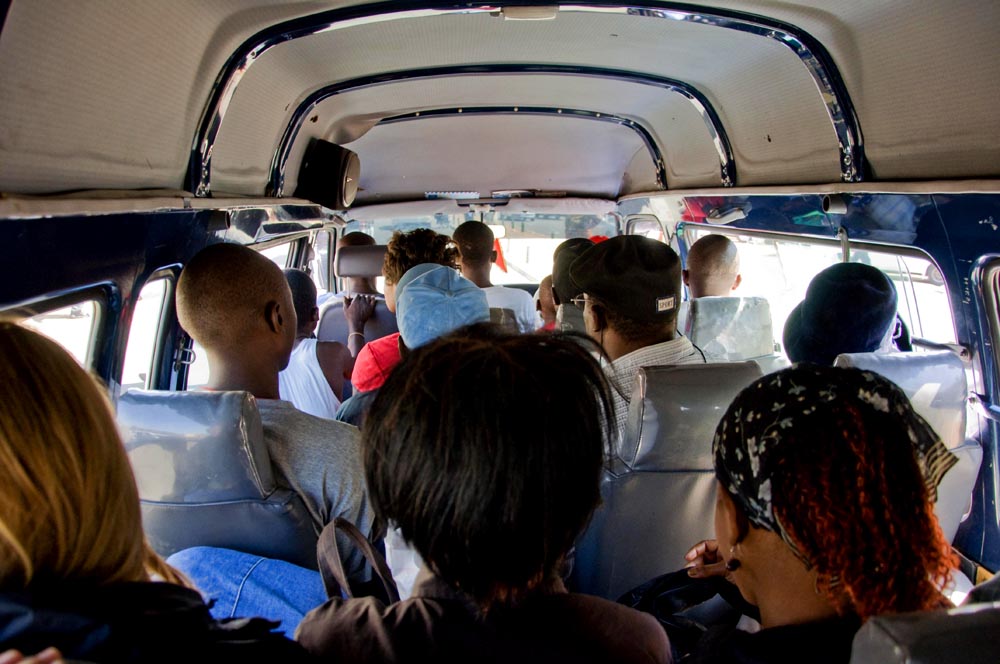
The view from the back of the minibus. In Africa, there's no such thing as personal space.


Agness, Tessa and I in the back row of the minibus.

Thursday, October 23

Jesse: Orientation

The morning is so quiet and peaceful. The Baptist Seminary of Zambia is a beautiful compound. It makes for a very peaceful place to rest and learn.

The more I’m around Zambians the more it is apparent that their culture is very similar to their West African brothers. Today’s lesson was mainly about greeting. Respect is very important.

Show respect in every situation and watch the doors open and the walls come down. As a woman, respect means never looking a man in the eyes and always letting them be first. Over the years I’ve gotten used to that. I caught myself in the states not looking at men, who’d been my friends for years, in they eyes and walking a few steps behind them.

I’m looking forward to getting out into the city tomorrow. We’re supposed to observe the culture around us--not really make conversation or try to build relationships. Just observe. See under and around what people are saying and doing. Tessa is my partner for the next 11 days. We’ll do every cultural outing together. I’m also excited to meet our cultural helper tomorrow too. Kevin, the leader, says she is tough and will watch out for us.

I walked two miles around the seminary after our last session and then played soccer with the guys. I think I surprised myself and all the others at my willingness to go for the ball and be able to somewhat handle it when I got it and all this in a skirt and sandals. But the African boys that played with us did it barefoot – I have no room to brag. Later, a healthy game of “Bible Outburst” was played with great enthusiasm. Very fitting game for a bunch of missionaries!


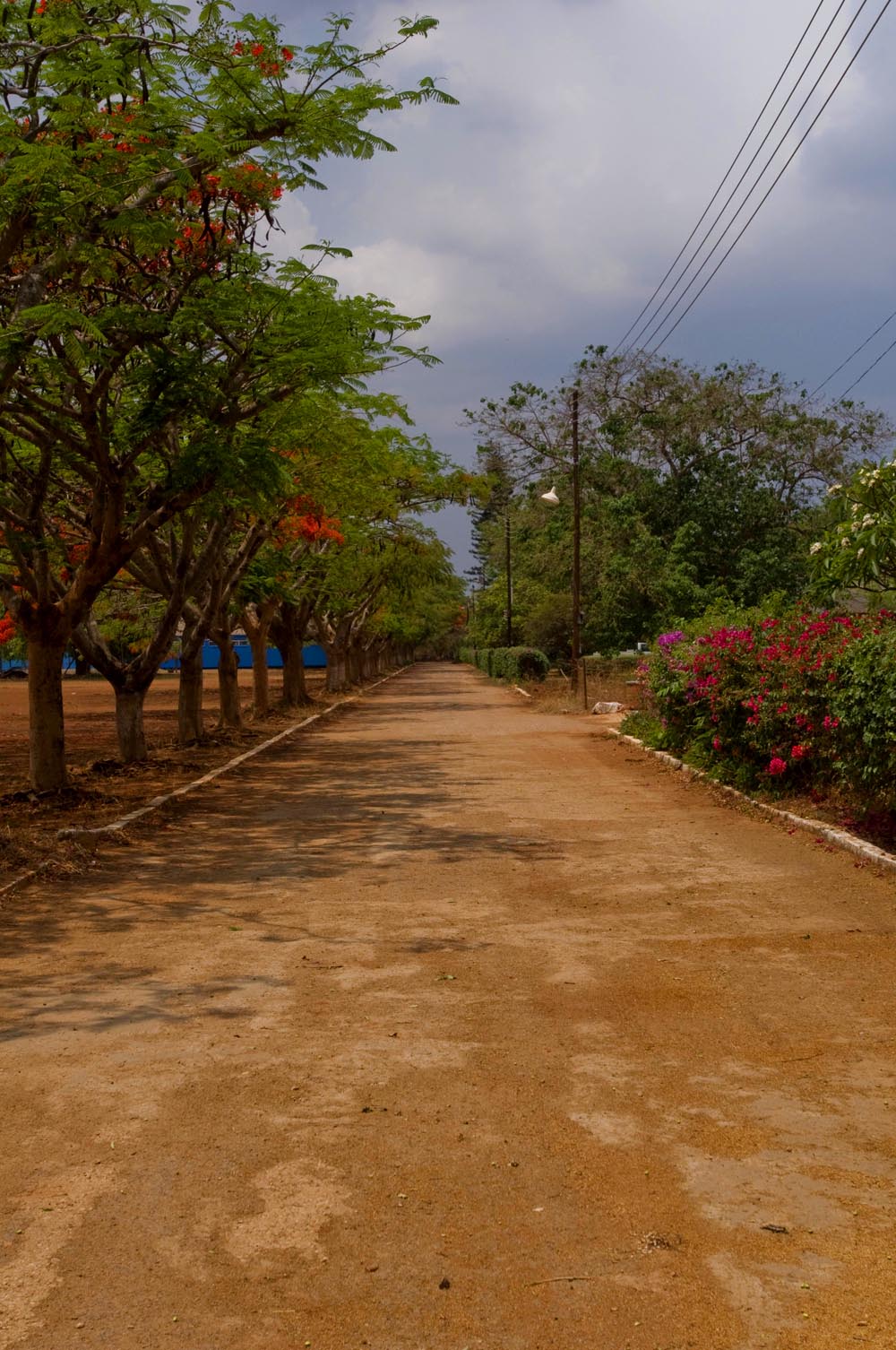
The seminary campus is beautiful. The road is lined with flame trees in full bloom.


My roommate, Mary, reads her Bible in our dorm room on the seminary campus.


Bible Outburst with Mary, Roxie, Jodie, Grant and Evan.

Wednesday, October 22

kristen: nairobi to lusaka

before the daylight crept into the kitchen, i poured the black, black coffee into a travel mug. i unpacked and repacked my backpack one last time, and walked outside to the waiting cab. by 7 am, jesse and i were on the plane, searching out empty rows. i was asleep in a window seat, before takeoff.

we finally arrived in lusaka around 1 pm. we cleared customs, grabbed our bags and joined jeff and jan, ethan and trevor in the waiting van. after several wrong turns, we arrived at the baptist seminary—the last missionaries to arrive at 40/40.

we were handed a green knapsack, and instructed to fill it with a set of dishes—bowl, plate, tin mug and silverware. these were ours to keep up with for the next month.

after lunch, we threw our stuff in our rooms (dorm-style, with bunk beds) and filed into the conference room. we played an icebreaker, then began orientation. we learned what to expect each day, rules and the schedule.

each pair of missionaries will be assigned a “cultural helper”—a zambian christian who will help us navigate this new culture, and act as a translator. each morning, we will have breakfast, small group bible study, then head out to the city to complete a daily field assignment, or DFA. the daily field assignment is meant to teach us how much we don’t know about the culture. most of our time will be spent observing, asking questions and learning. in the afternoons, we will have a time of debriefing and a lecture that will correspond to the next day’s DFA.


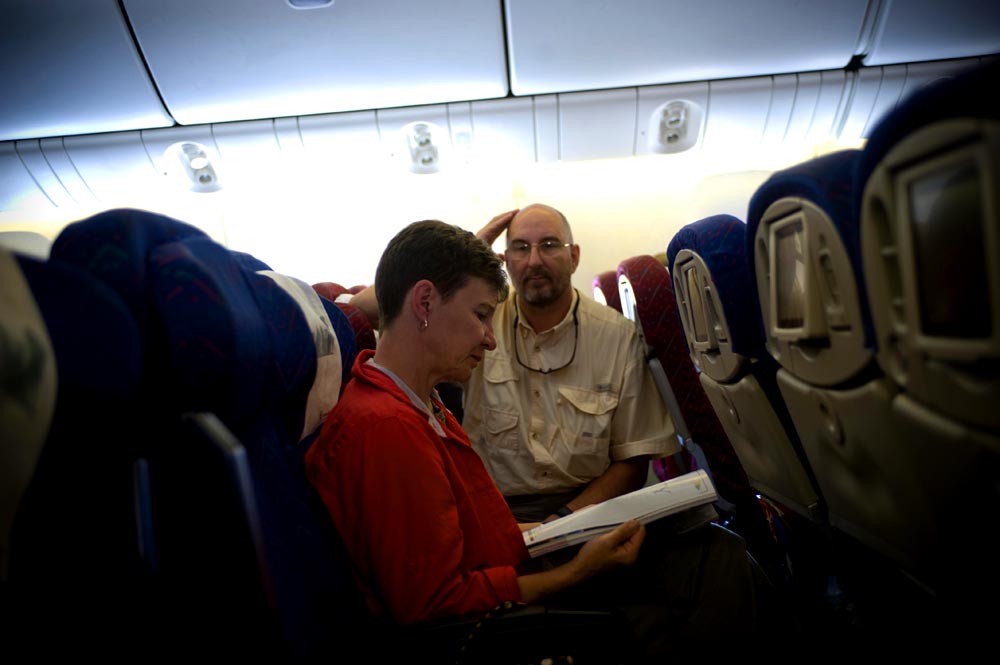
jan and jeff, our friends from nairobi, were on our 7 am flight to lusaka.


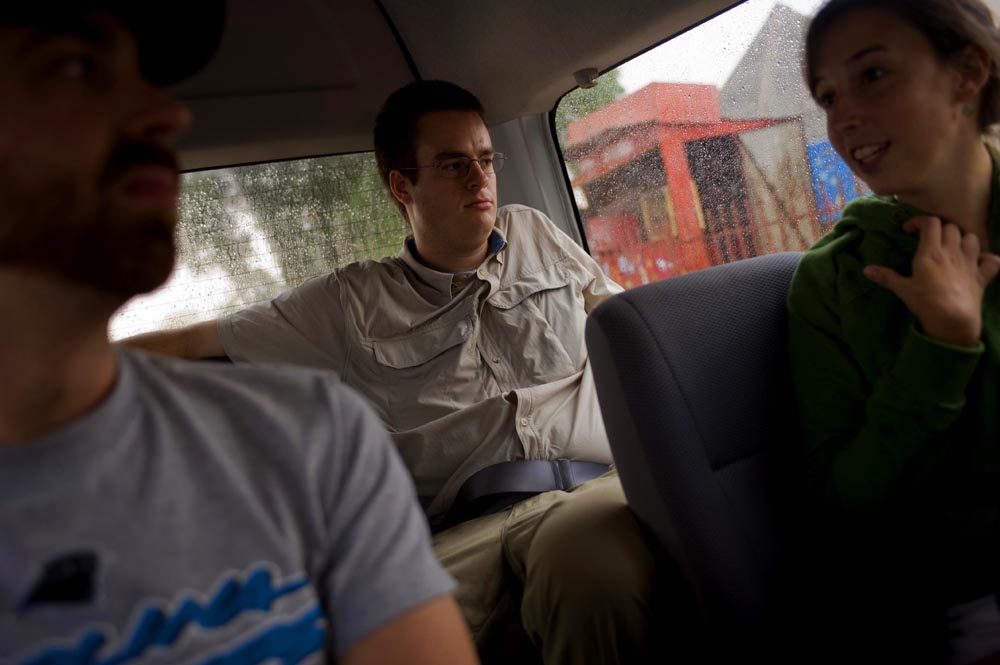
evan, trevor and jesse on the ride from the airport to the lusaka seminary that will be our home for the next two weeks.


our 40/40 schedule. notice the lack of blank space. its going to be a busy, busy month.

Tuesday, October 21

Jesse: A new journey.

I've just finished packing my backpack for 40/40. For the next 30 days, my teammate and I will be living in Zambia, learning how to be missionaries in Africa. We'll spend 12 days in Lusaka, learning in an urban context, then we'll travel out to bush camp (no electricity, no running water) where we will live for nine days in tents and learn about serving in a rural context. After that, we will spend three days living with an African family. We will sleep where they sleep, eat what they eat and work alongside them.

The 40/40 training program, 40 days and 40 nights in Africa, teaches missionaries to immerse themselves in the African culture, to truly appreciate the lives of those they want to see come to believe in Christ. Participants prepare for life in Sub-Saharan Africa by observing, interviewing and interacting with Africans in the southern African country of Zambia. They also learn from the experience of seasoned missionaries and African Baptists on the best ways to share the love of Christ.

So, as we were preparing for our trip, we decided that we wanted to share our experiences with people who may never have the opportunity to visit Africa. And for people who might be interested in what it's like to be a missionary.

So, this blog is to inform the masses about how missionaries learn to be missionaries in Sub-Saharan Africa.

As we embark on this journey, we will both be carrying a journal, and a camera. What we won't have is internet.

But when we return, we will post everything to a blog, just as it happened.

That means everything you’re reading is being uploaded after the fact, but it really did happen.

The training is not really 40 days long, but we’re given devotionals for the five days before we left and the five days after we got back, to prepare us for the training and then to help us take what we’ve learned and start thinking about the future.

I’m excited to see what’s going to happen at 40/40. After living in West Africa for two and a half years I can’t wait to experience the culture in this part of Africa. How much is the same? What is different? Will the cultural things I learned in West Africa carry over?

Tuesday, January 1

Jesse


I have a passion to see the world.

I am young. I am single. I travel the bush of Africa.

From the tropical coastlines and desolate interior to the Sahara Dessert in western Africa, I witness missionaries surviving in the roughest conditions share the love of Christ through humanitarian aide, friendship and evangelism. I worked for two and a half years in multi-media communications.

I learned that I can go four days with just a bucket, but after that it gets really hard to not think about taking a shower.

Traveling around Africa, I am in searching of where God is at work to find inspirational stories and photographs. Through stories that I write, I hope others find where they, too can be used by God and better understand his calling in their lives.

In fall of 2008, I moved to East Africa.

Part of my job is not just observation but partaking in the work of these dedicated missionaries. For this reason I attended a training program called 40/40.

I’m excited to see what’s going to happen at 40/40. After living in West Africa for two and a half years I can’t wait to experience the culture in this part of Africa. How much is the same? What is different? Will the cultural things I learned in West Africa carry over?

kristen nicole


more often than not, i see the world through a lens.
i am a (photo)journalist living in kenya. before i moved to africa, i lived in memphis, planting gardens, drawing with sidewalk chalk and hanging out with neighborhood kids. (to pay the bills, i took pictures for the newspaper.)

i’m addicted to coffee, and to the company of people who are alive.
a sometimes-vegan, i’ll eat whatever is put in front of me if i’m away from home.

i believe that people have value and truth is powerful. this is why i tell stories: to give a voice to the voiceless, and to challenge what we know.